The four most common landscape mistakes that landscape professionals see in Virginia yards are mulch volcanoes piled against tree trunks, plants installed too close together, ignoring drainage problems, and over-pruning shrubs into tight balls — all of which damage plant health and shorten landscape lifespan.
Mistake 1: Mulch Volcanoes
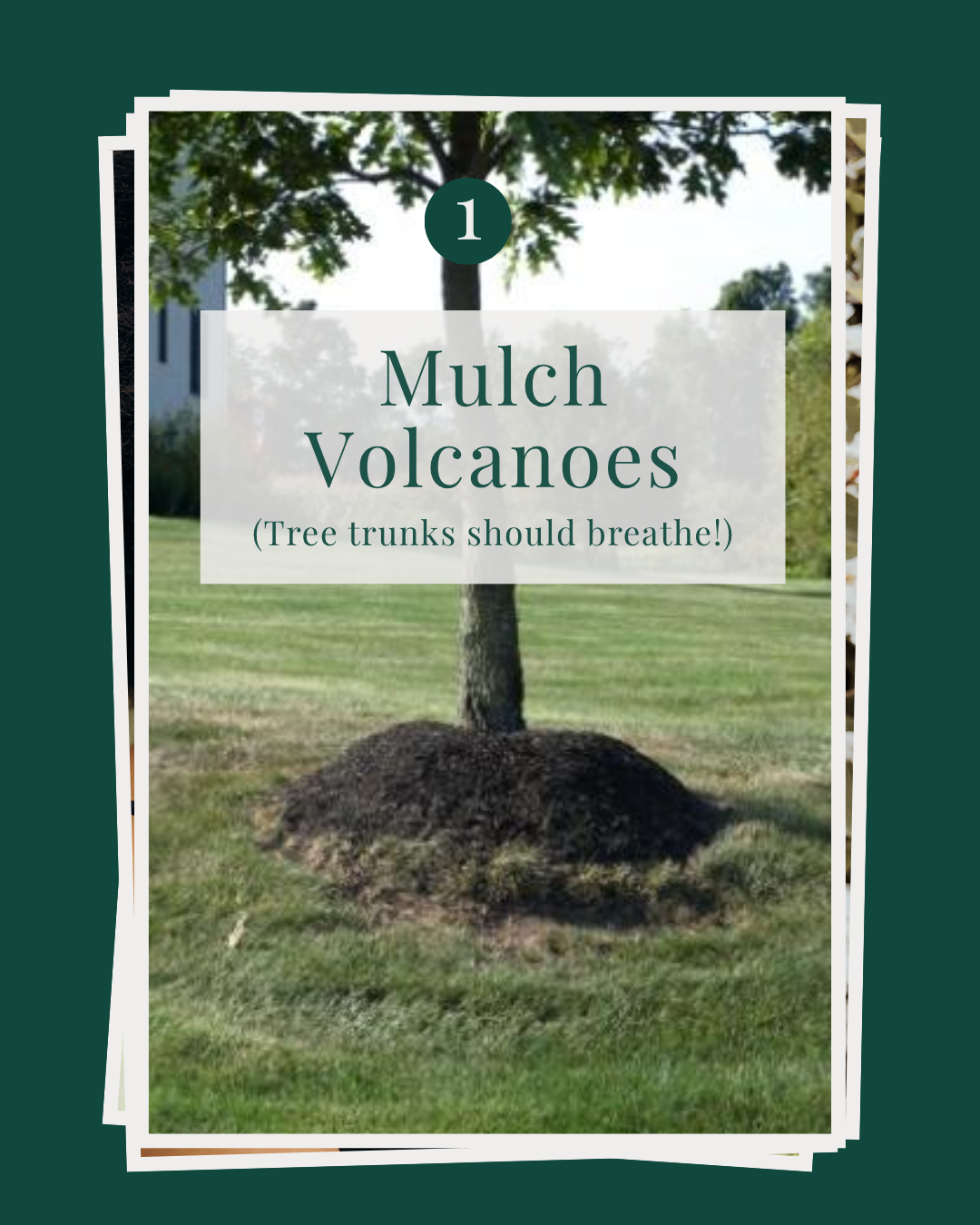
A "mulch volcano" is a cone-shaped pile of mulch heaped against a tree trunk, often a foot or more high. It is one of the most common — and most damaging — landscape mistakes in Virginia. Mulch piled directly against bark traps moisture against the trunk, encourages rot, invites insect and rodent damage, and can suffocate the root flare. Tree trunks should breathe.
Fix: Pull mulch back several inches from the trunk and form a flat, donut-shaped ring instead. Aim for a layer two to three inches deep, no deeper, and never touching the bark. The root flare — the place where the trunk widens at the base — should be visible.
Mistake 2: Plants Installed Too Close Together

A newly installed bed looks gappy if you space plants properly, so the temptation is to crowd them in for an instantly full look. Two seasons later, the same bed is a fight for sunlight and airflow, with shrubs growing into each other and perennials shading themselves into decline.
Fix: Space plants based on their mature size, not their nursery-pot size. They will grow. A good designer will draw the bed at year three or year five, not opening day.
Mistake 3: Ignoring Drainage
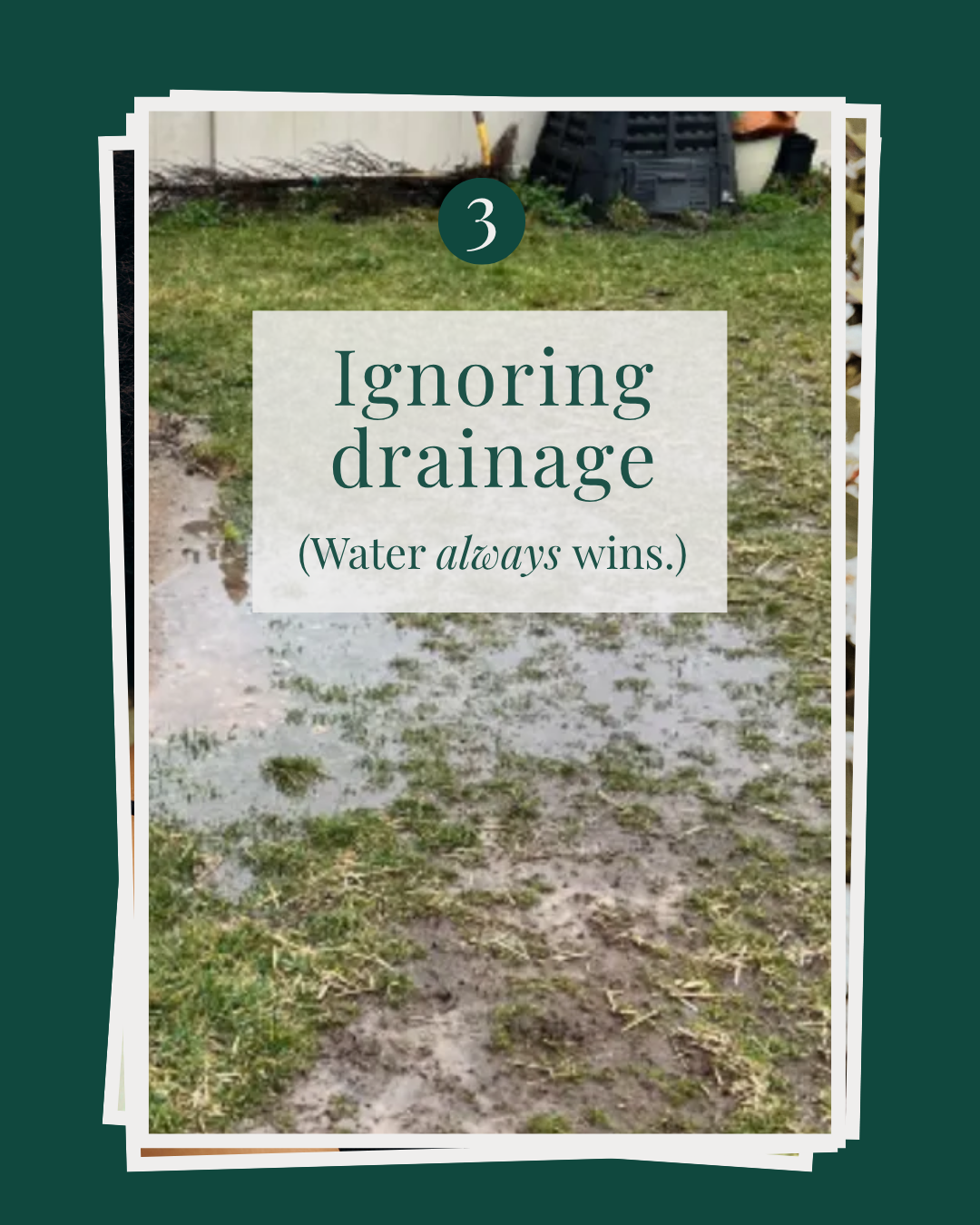
Water always wins. A low spot that holds water after every rain will eventually kill anything planted in it, undermine a foundation, drown a lawn, or carve a channel through the prettiest mulch bed on the property. Drainage problems do not solve themselves.
Fix: When you notice a wet spot, document it. Winter rain is one of the best diagnostic tools — take photos, note where water pools and how long it stays. Then talk to a contractor about grading, French drains, dry wells, or rain gardens that can be designed into the next phase of work.
Mistake 4: Over-Pruning Shrubs
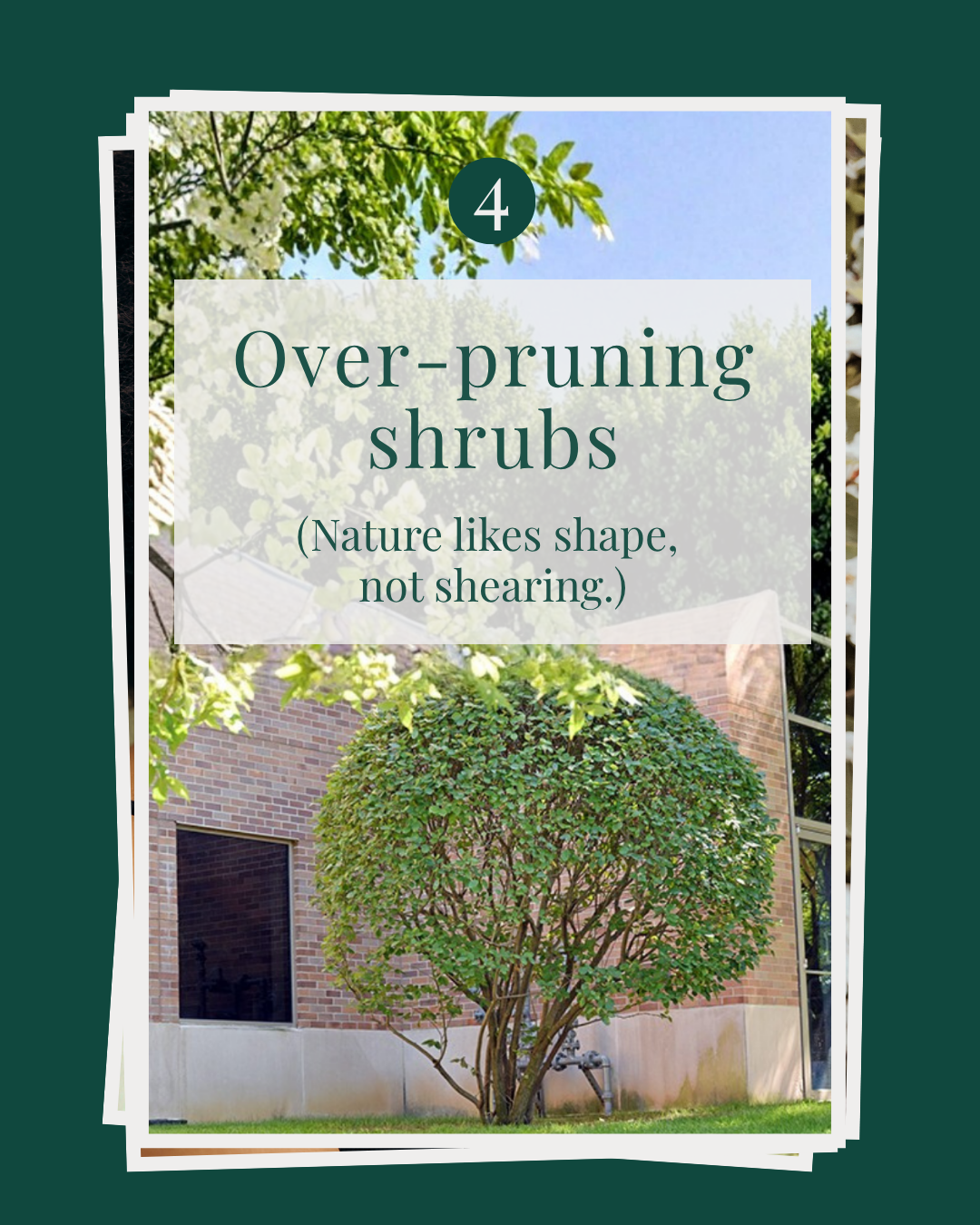
Nature likes shape, not shearing. The reflex to take electric hedge trimmers to every shrub on the property creates tight, lollipop-looking forms that flower poorly, develop dead interiors, and need more frequent maintenance, not less. It is also tough on the plant.
Fix: Prune for the plant's natural form. Most flowering shrubs benefit from selective hand-pruning that opens up the interior, removes dead or crossing branches, and respects each plant's growth habit. Save the shears for true hedges.
Every one of these mistakes traces back to the same root cause — a missed planning step. Good landscapes start with good planning. Right plant, right place. Mulch as a tool, not a pile. Drainage designed in from the start. Pruning that respects the plant. Get those right and the rest of the landscape gets a lot easier.
Why are mulch volcanoes bad for trees?
Mulch volcanoes — mulch piled high against a tree trunk — trap moisture against the bark, promote rot and disease, hide insect and rodent damage, and can suffocate the root flare. Mulch should be applied in a flat, donut-shaped ring two to three inches deep, kept several inches away from the trunk.
How far apart should I space landscape plants?
Landscape plants should be spaced based on their mature size, not their nursery-pot size. Most shrubs need three to six feet of space depending on species; perennials typically need eighteen inches to three feet. Planting at correct spacing avoids crowding, disease, and the need to remove plants later.
How do I fix drainage problems in my yard?
Yard drainage problems are usually fixed by correcting grade, installing French drains or dry wells, redirecting downspouts, or designing rain gardens to absorb runoff. The best first step is to document where water pools and for how long, then consult a landscape contractor about a tailored solution.
How should I prune flowering shrubs?
Most flowering shrubs are best pruned with selective hand cuts rather than electric shears. Remove dead, damaged, or crossing branches first, then thin selectively to maintain the plant's natural form. Timing depends on whether the shrub blooms on old or new wood.
Plan Your Next Project With James River Nurseries
If your landscape has any of these issues — or you'd rather not find out the hard way — JRN's team can audit your property and put together a plan. Reach out at jamesrivernurseries.com/contact.