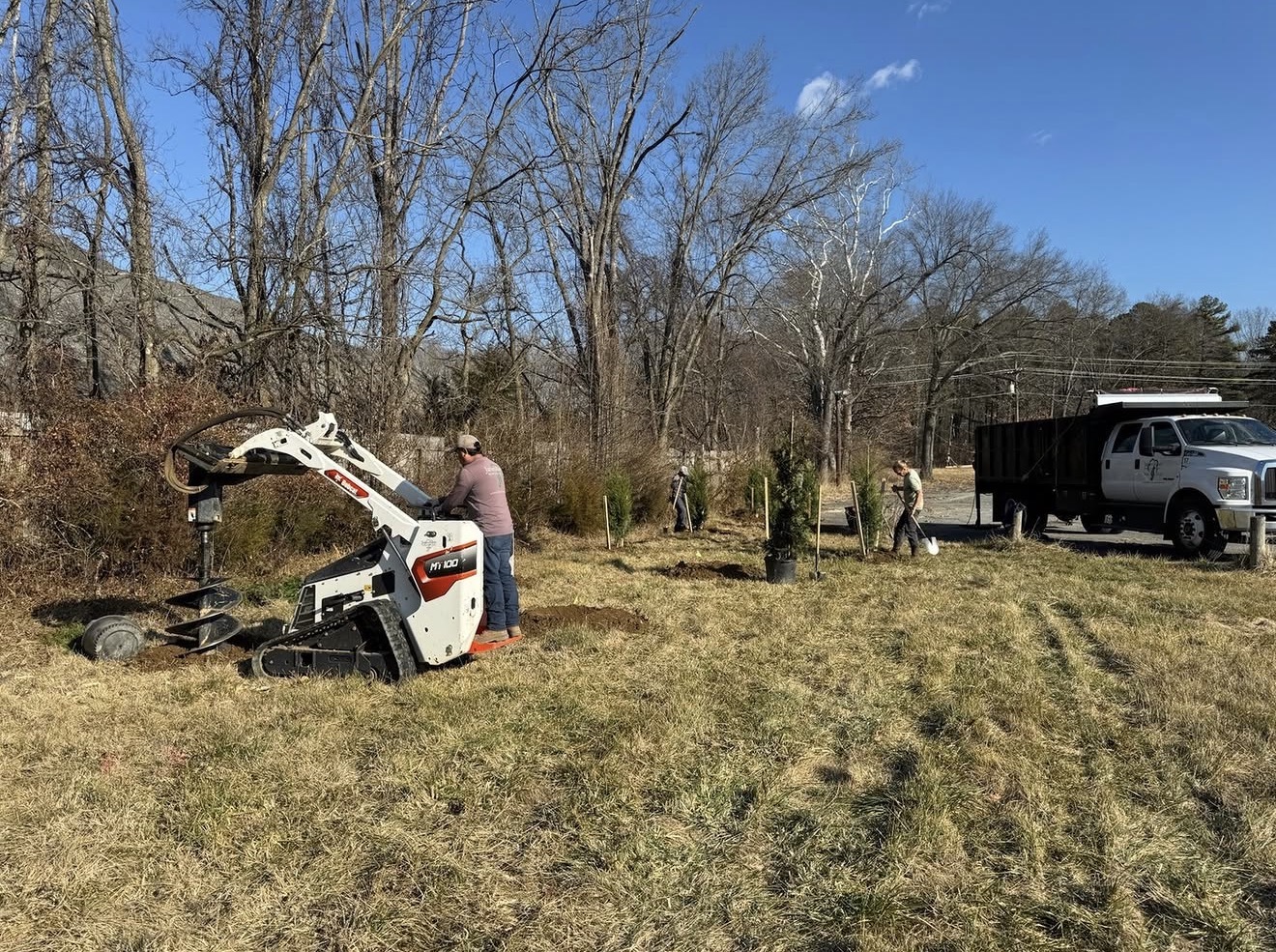
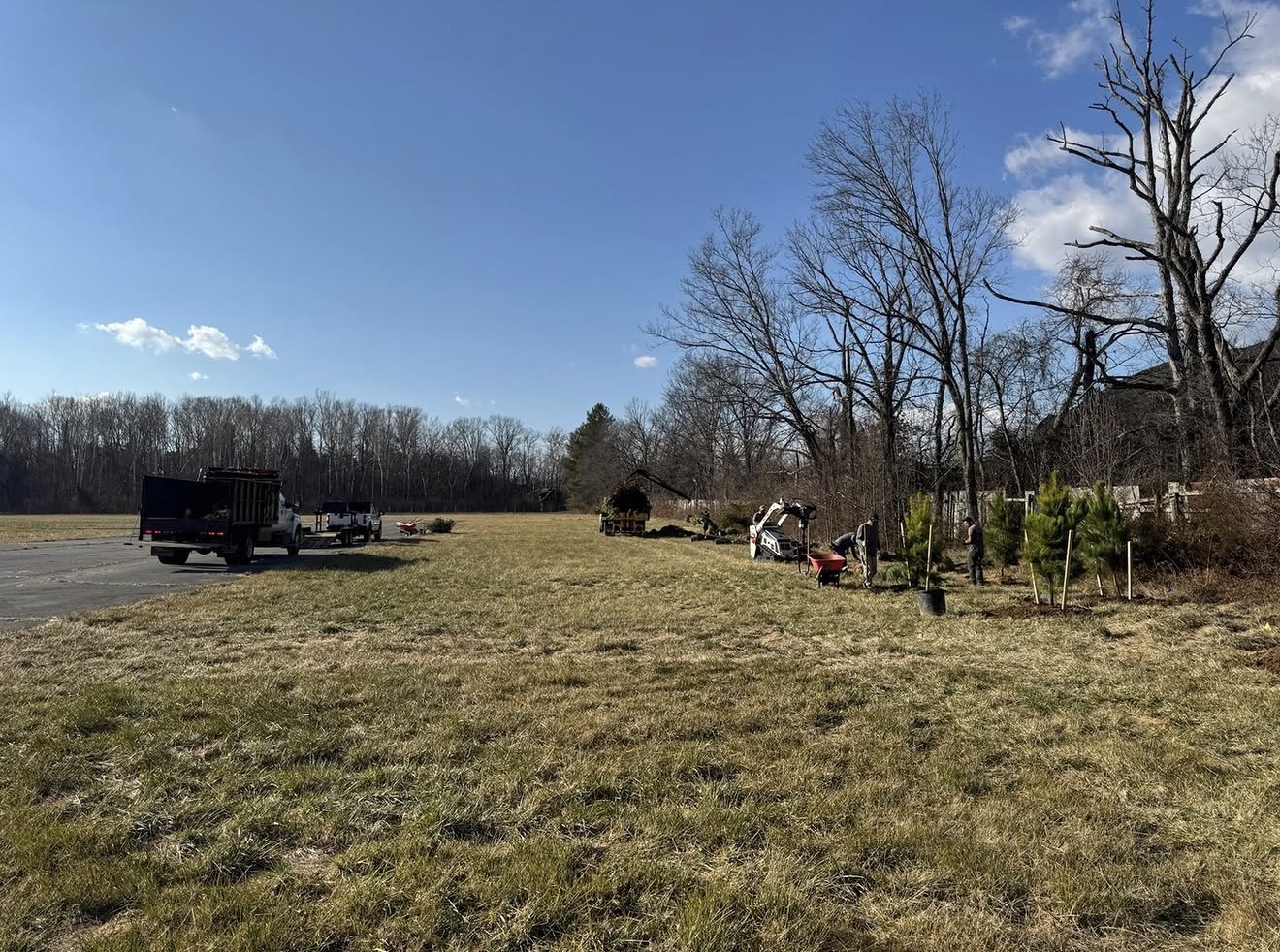
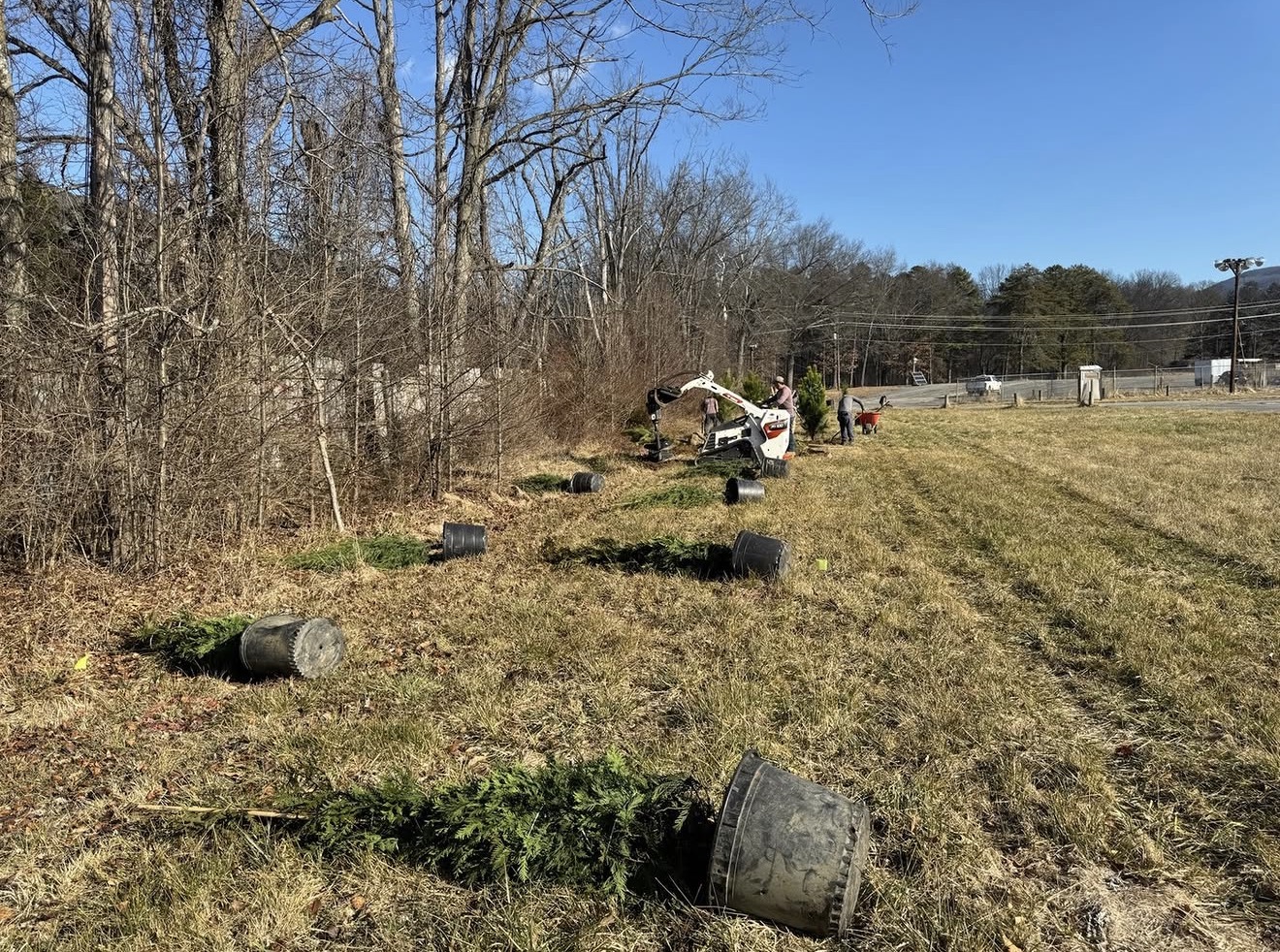
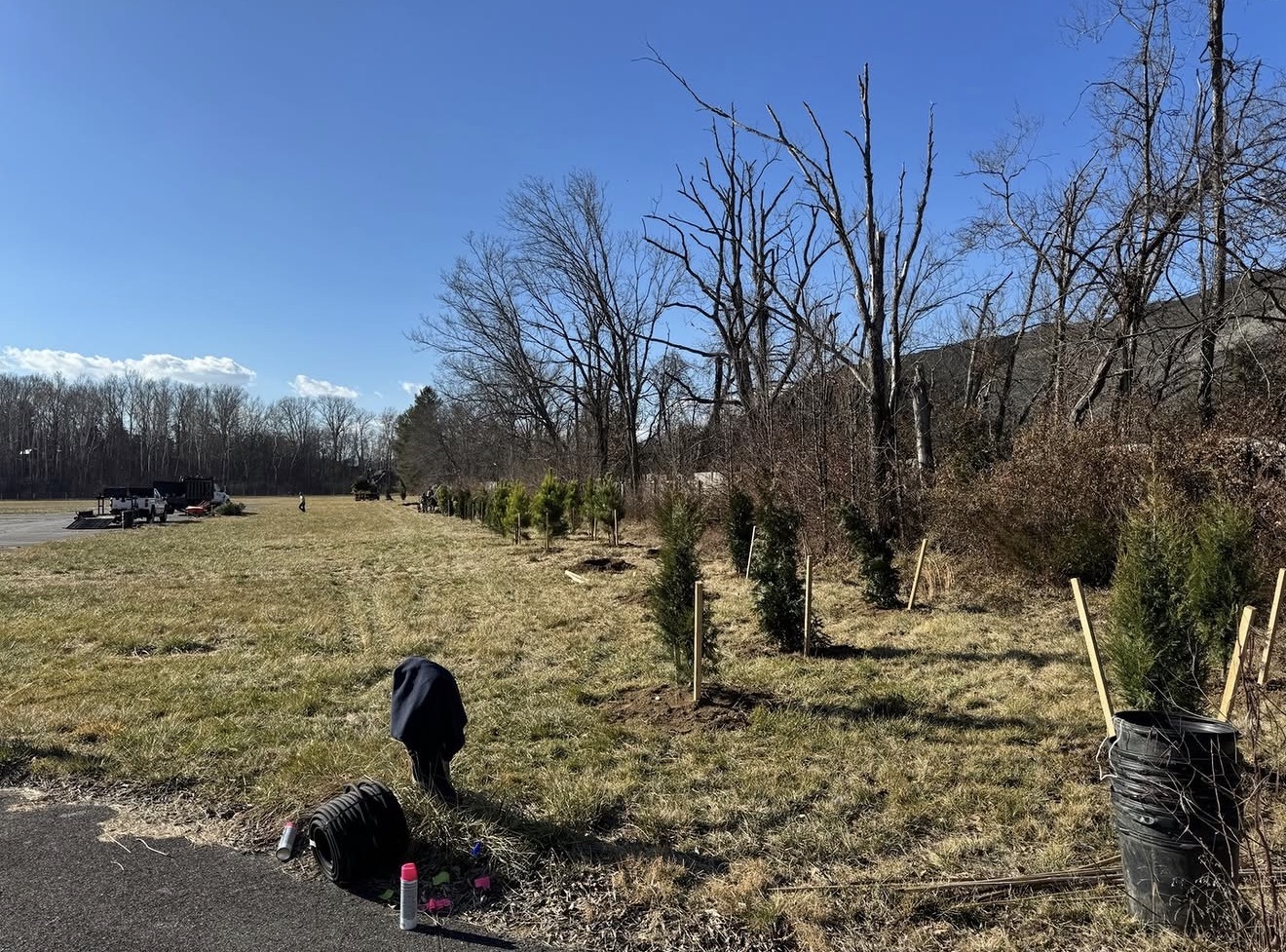
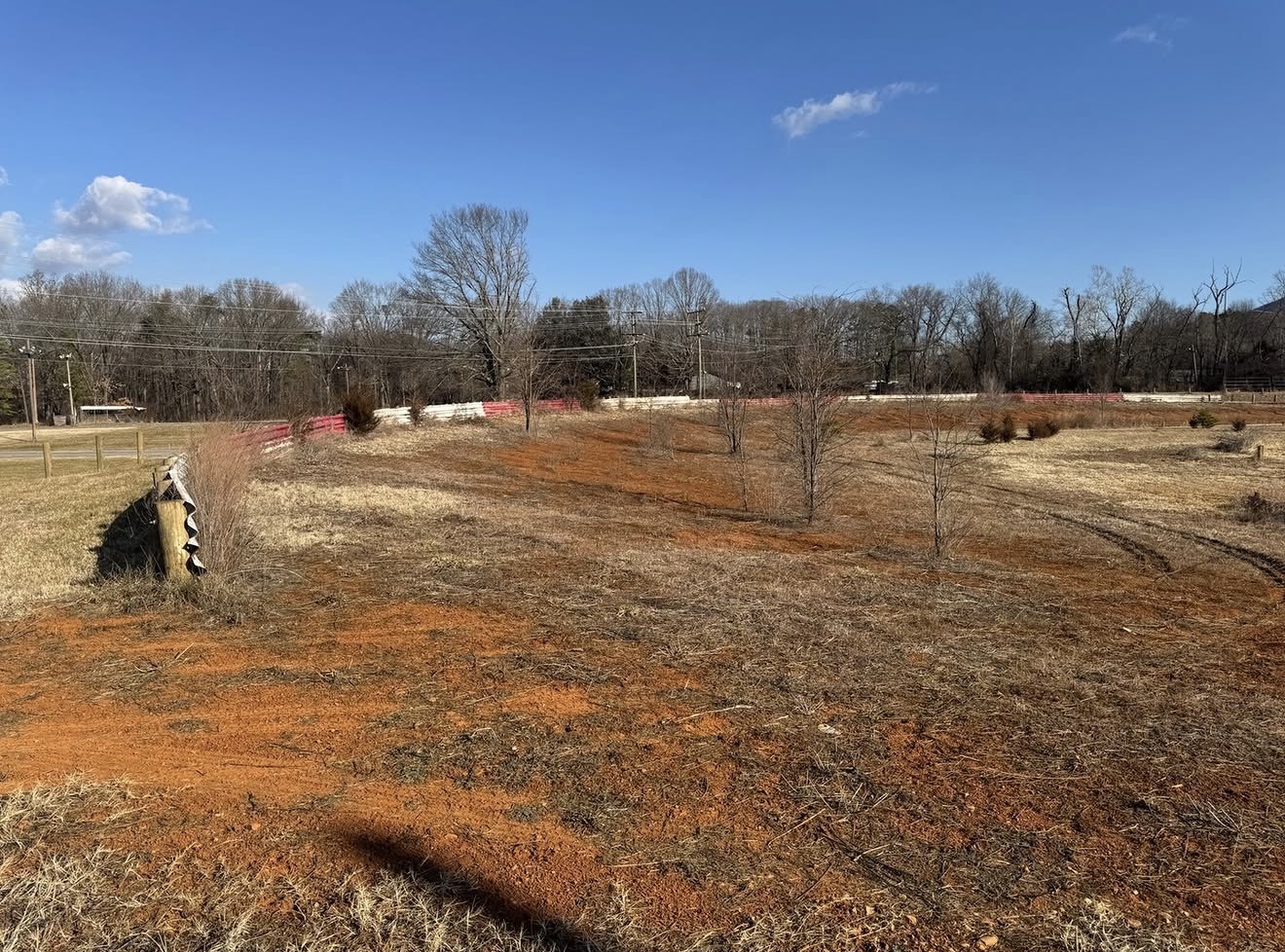
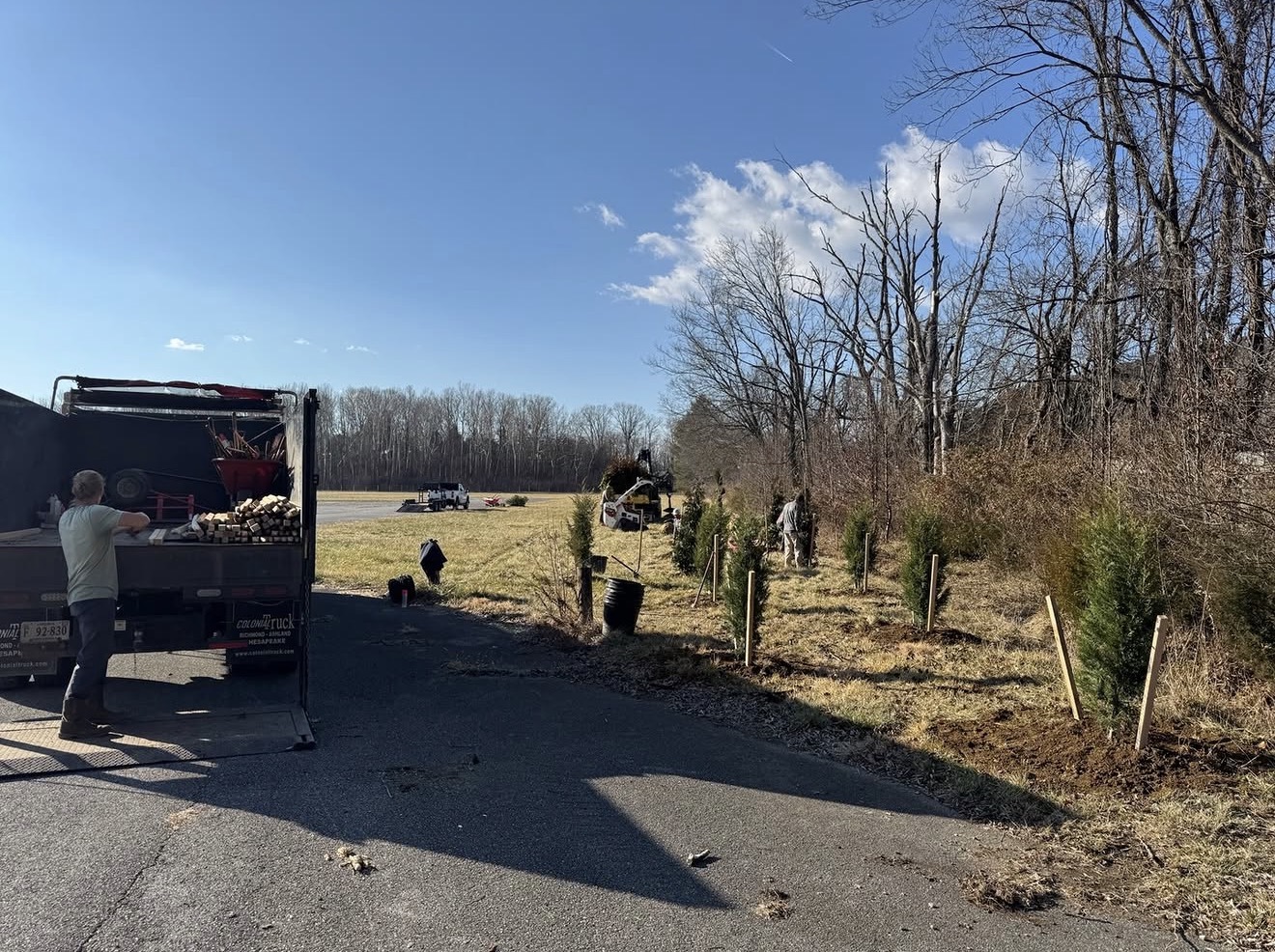
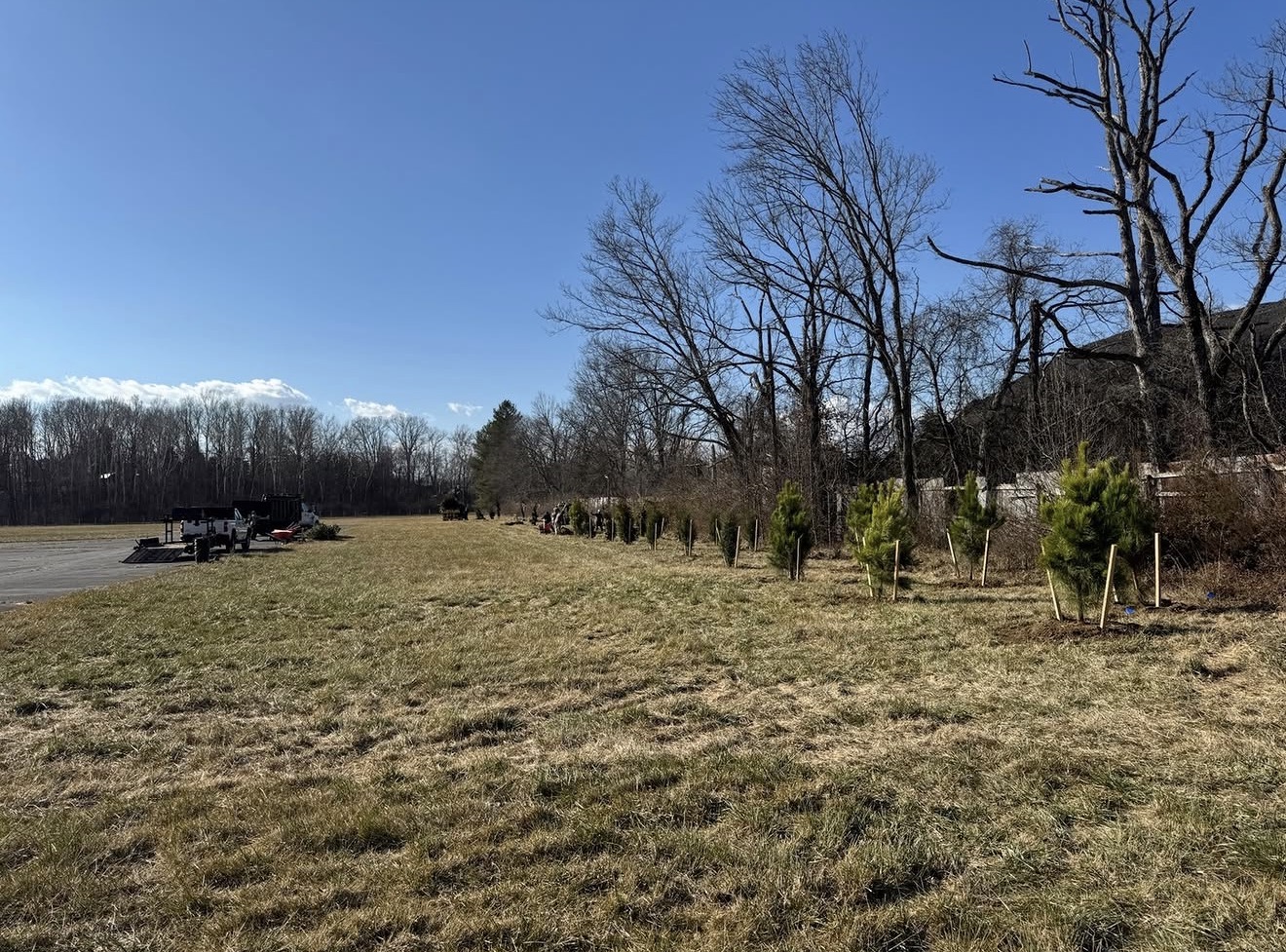
James River Nurseries is installing buffer screening at a former Waynesboro, Virginia speedway being reworked as the Dooms Laydown Yard for a Dominion Energy project, with the goal of creating visual separation, softening the site's footprint, and establishing a landscape that performs from day one and improves over time.
From Abandoned Speedway to Functional Industrial Site
Some of the most interesting landscape work happens on sites most people never visit. The former Dooms Speedway in Waynesboro is being thoughtfully reworked as a laydown yard for an upcoming Dominion Energy project — and from the very first day on site, buffer screening has been a key piece of the plan.
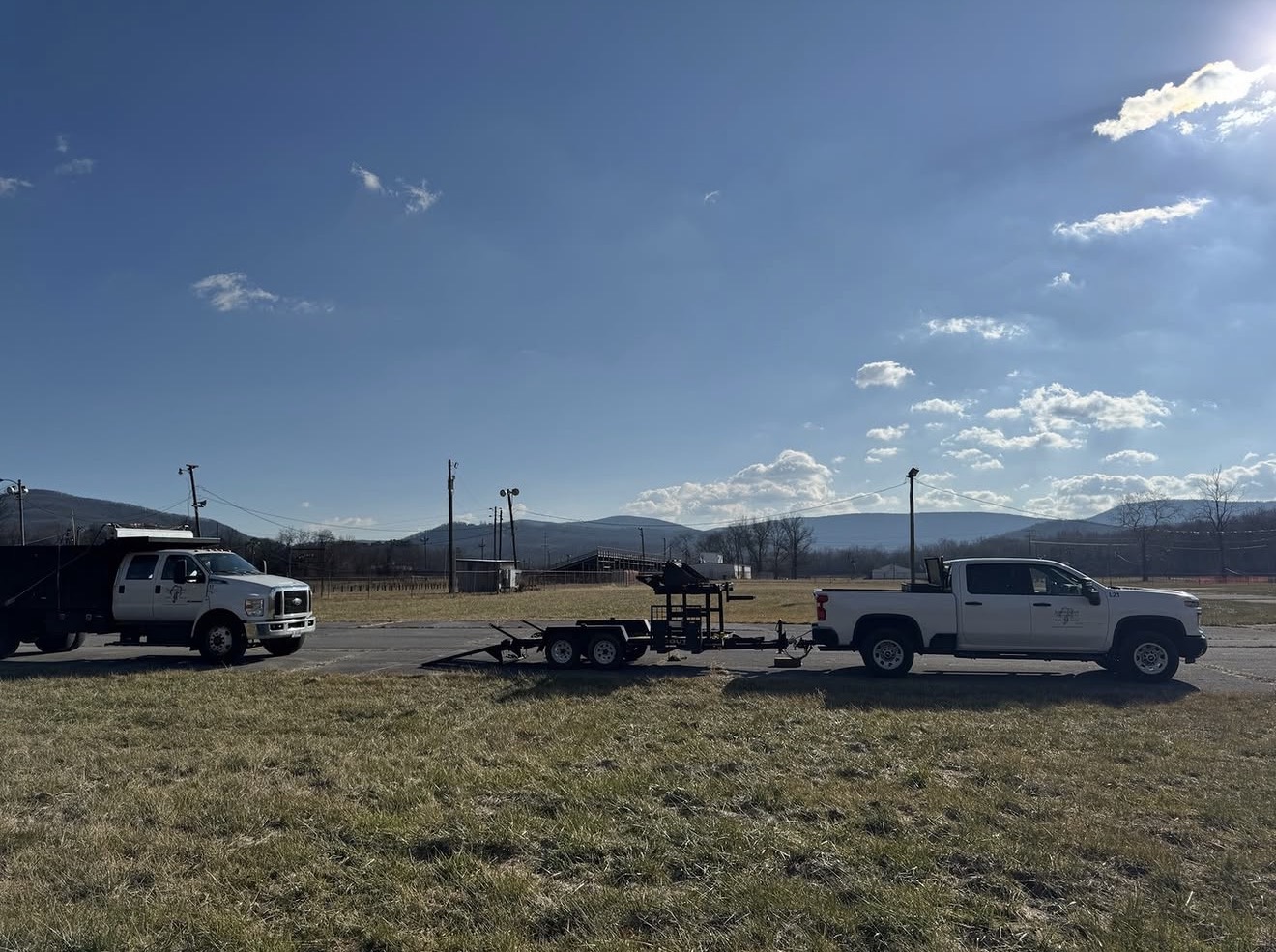
JRN's team rolled in with augers, dump trucks, and a tightly choreographed planting list. Within hours, the first row of evergreens was in the ground, beginning the slow but steady process of giving the site a softened edge along the road.
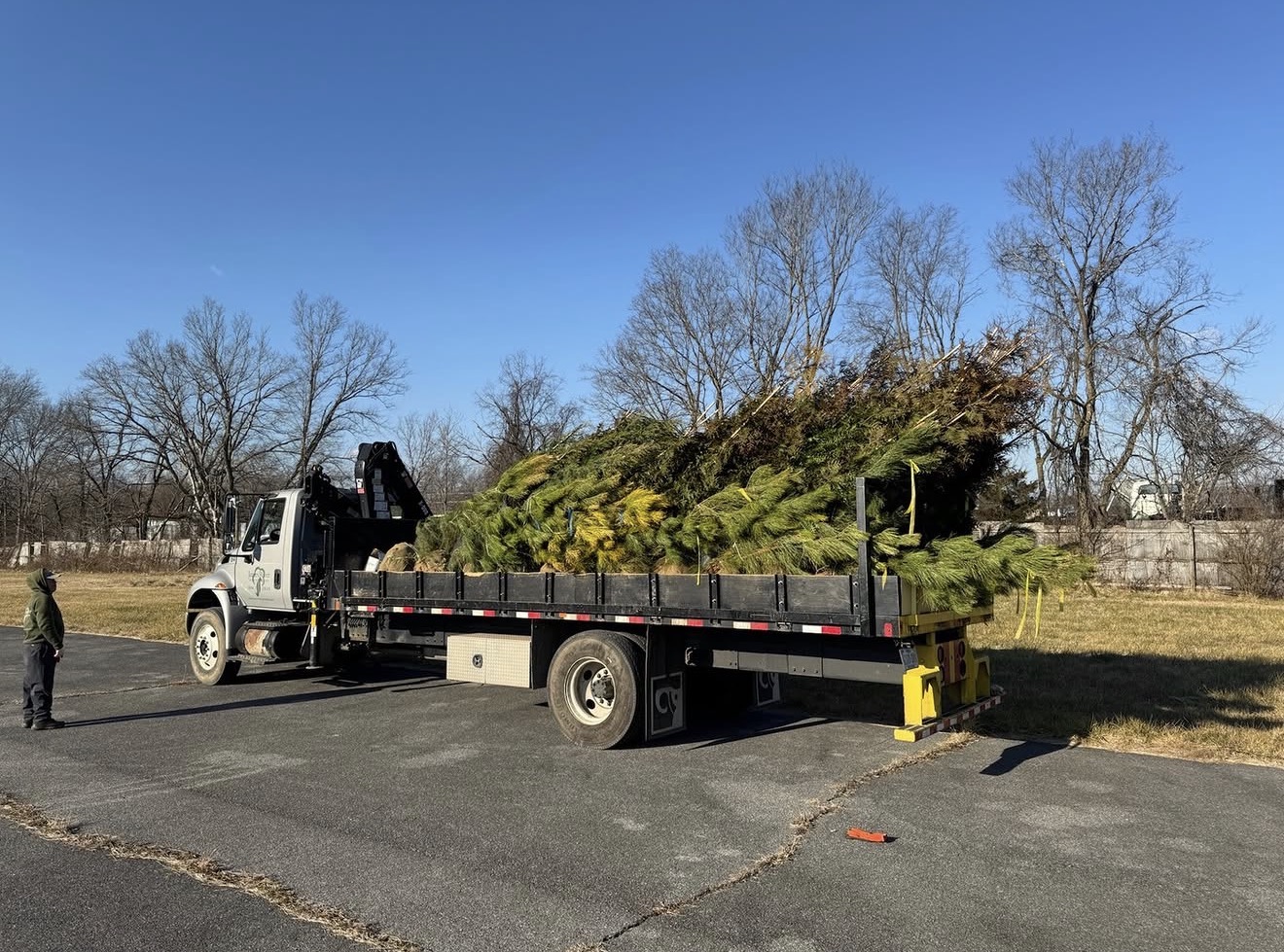
What Is Buffer Screening?
Buffer screening is a planted barrier — usually a row or grouping of evergreen trees and shrubs — installed along the edge of a commercial, industrial, or utility site to create visual separation between the site and surrounding roads, neighbors, or natural areas. Done well, it does several jobs at once: it screens equipment storage and operations from public view, it reduces noise and dust, it softens the visual impact of fences and gates, and over time it adds wildlife habitat and ecological value.
On industrial and utility projects in Virginia, buffer screening is often part of the local zoning or special-use permitting requirements. But the best installations go beyond compliance and treat the buffer as a real piece of the landscape — one that gets healthier and more effective every year.
Designed to Function From Day One
The goal on the Dooms project is a landscape that works immediately and improves over time. That means specifying plant material that is large enough to provide screening at installation, spacing it for healthy long-term growth, and establishing soil and irrigation conditions that give every plant the best chance to thrive.
Projects like this remind the JRN team that successful landscapes are not just about aesthetics — they are about planning, context, and long-term performance from day one.
Frequently Asked Questions
What is buffer screening on a commercial or industrial site?
Buffer screening is a row or grouping of evergreen trees and shrubs planted along the edge of a commercial, industrial, or utility site to create visual separation, reduce noise and dust, and soften the visual impact of operations on surrounding roads, neighbors, and natural areas.
What plants are best for buffer screening in Virginia?
In Central Virginia, common buffer screening plants include 'Green Giant' arborvitae (Thuja standishii × plicata), 'Nellie R. Stevens' holly (Ilex × 'Nellie R. Stevens'), Eastern red cedar (Juniperus virginiana), and Southern wax myrtle (Morella cerifera). Selection depends on site conditions, exposure, and screening goals.
Who installs commercial buffer screening in Virginia?
James River Nurseries installs commercial and industrial buffer screening across Central Virginia and beyond, including utility, energy, and commercial laydown sites. JRN handles plant sourcing, site preparation, installation, and establishment care.
Plan Your Next Project With James River Nurseries
If your project requires buffer screening — or any large-scale commercial planting — JRN's team can help you design and install a landscape that performs immediately and improves over time. Visit jamesrivernurseries.com/contact to start the conversation.
Further Reading & Sources