A beautiful landscape isn't only about what you see on opening day. Some of the most important work is happening beneath the surface.
James River Nurseries is proud to have played a role in the transformative work underway at Lewis Ginter Botanical Garden in Richmond, Virginia, helping establish landscapes designed not simply to look beautiful when they're installed, but to thrive for years to come.
From thoughtful soil preparation to the installation of native and non-invasive plant material, the project demonstrates an important principle of successful landscape construction: long-term plant health begins with how a landscape is built.
Recently, members of our team had the opportunity to return to Lewis Ginter with the Central Virginia Nursery and Landscape Association and see the progress firsthand. It was an opportunity to appreciate not only how far the project has come, but also the collaboration, planning and horticultural expertise behind it.
What Makes a Landscape Sustainable?
Sustainable landscaping can mean many things, and there isn't one plant palette or construction technique that automatically makes a landscape "sustainable."
Instead, it means considering how decisions made during design, construction and installation can affect the landscape for years to come.
That can include selecting plants suited to site conditions, improving soil where necessary, supporting healthy root development, managing water thoughtfully and choosing installation methods that give plant material the best opportunity to establish successfully.
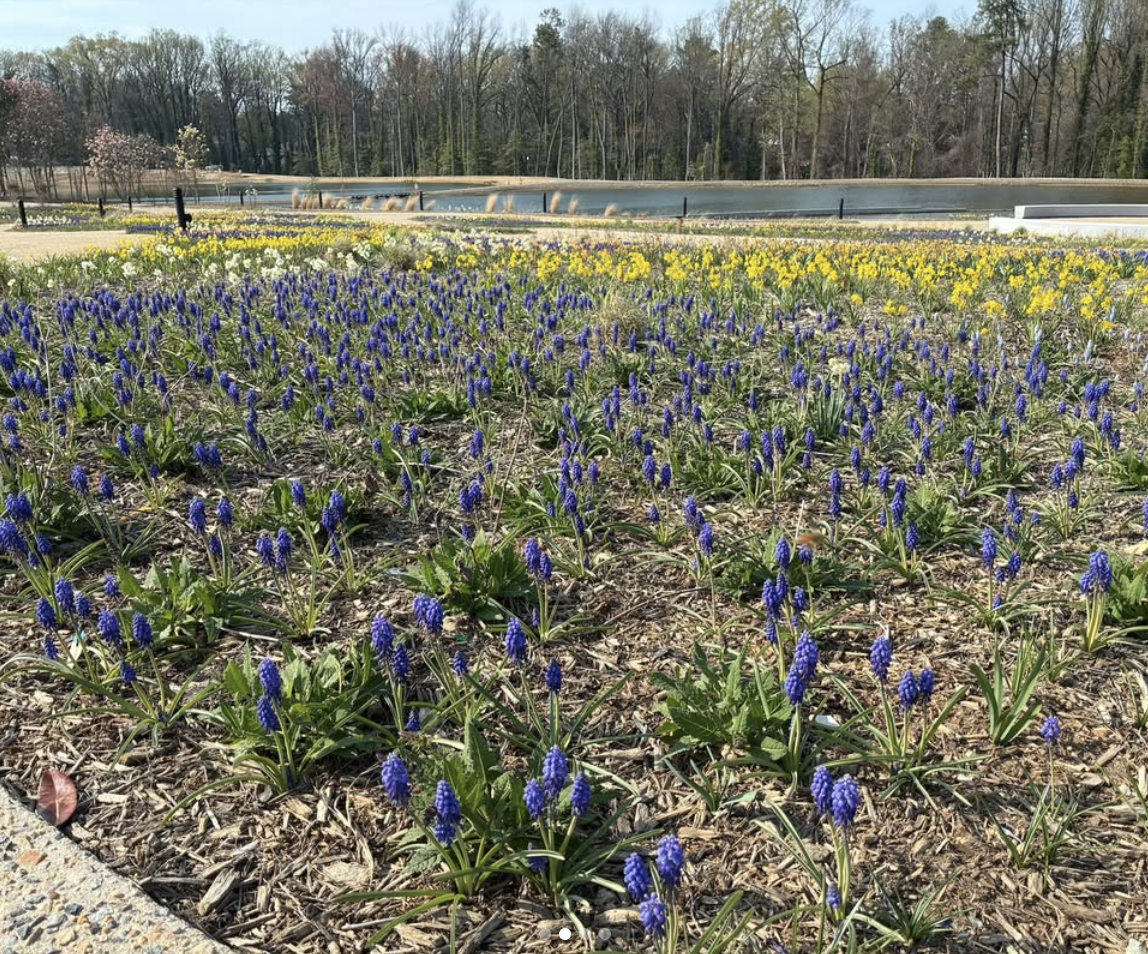
For large-scale landscapes like those at Lewis Ginter Botanical Garden, these considerations become particularly important. When thousands of plants are being installed, thoughtful decisions at the beginning can have an enormous impact on the landscape's long-term performance.
Healthy Landscapes Start With Healthy Soil
What's happening underground is just as important as what's happening above it.
Soil provides the physical and biological environment in which plants establish their roots, access water and obtain nutrients. Even exceptional plant material can struggle when installed in soil that doesn't adequately support its needs.
As part of our work at Lewis Ginter, thoughtful soil blends helped support the long-term health of the new plantings.
This is an important part of professional landscape installation that homeowners and visitors may never see.
Before the finished plants begin filling in, landscape contractors must consider existing site conditions and the soil environment into which those plants are being introduced. Depending on the project, that may require soil preparation or amendments designed around the needs of the landscape.
It's not necessarily the most visible part of landscape construction, but it can be one of the most consequential.
Native and Non-Invasive Plants in Sustainable Landscapes
Plant selection is another important part of creating resilient landscapes.
The Lewis Ginter project incorporates native and non-invasive plantings as part of a landscape intended to develop and thrive over time.
Native plants can offer important benefits when they're appropriately matched to a site. Because they have evolved within regional ecosystems, many can be well suited to local environmental conditions while also providing resources for native insects, pollinators and other wildlife.
But "native" doesn't automatically mean "right for every location."
Sun exposure, moisture, drainage, soil conditions, mature plant size and the overall design intent still matter. Successful planting design considers all of these factors rather than choosing plants based on a single characteristic.
Non-invasive plants can also play an important role in thoughtfully designed landscapes, providing particular forms, textures, colors or seasonal characteristics without introducing plants known to spread aggressively into surrounding ecosystems.
The result can be a diverse planting palette designed around both aesthetic goals and long-term landscape performance.
Sustainable Installation Matters, Too
Choosing the right plants is only part of the equation.
How those plants are handled and installed can influence how successfully they establish.
On a large-scale landscape project, crews may be responsible for installing thousands or even tens of thousands of individual plants. Maintaining proper planting techniques across that volume of material requires experienced crews, careful coordination and attention to detail.
That means considering appropriate planting depth, soil conditions, spacing and the relationship between the plant material and its surrounding environment.
The goal isn't simply to get plants into the ground.
It's to give the landscape the strongest possible start.
A Landscape Designed to Evolve
One of the most exciting aspects of a garden like Lewis Ginter is that the landscape visitors see today isn't the landscape they'll see several years from now.
Plants grow. Perennials spread and mature. Relationships between plant communities become more apparent. Different species take the spotlight as the seasons change.
That's especially true within naturalistic and meadow-style plantings, where the evolution of the landscape is part of the design itself.
Good landscape construction has to account for that future.
Instead of evaluating an installation solely by how full it looks on day one, experienced landscape professionals also consider how plants will establish, mature and interact with one another over time.
In that sense, installing a landscape is just the beginning.
Collaboration Behind the Garden
A project as complex as the transformation at Lewis Ginter requires expertise from many different disciplines.
Landscape architects, designers, horticulturists, contractors, growers and installation crews each contribute different knowledge to the finished landscape.
For James River Nurseries, being able to return to the Garden alongside members of the Central Virginia Nursery and Landscape Association offered an opportunity to see that collective work taking shape.
It's something our team is especially proud of.
The landscapes visitors ultimately experience are the result of countless decisions and details, many of which are invisible once construction is complete.
Sustainable Landscape Construction in Richmond, Virginia
Since 1983, James River Nurseries has worked throughout Richmond and Central Virginia to build landscapes designed for both immediate impact and long-term success.
Our experience spans residential, commercial and institutional landscape construction, including complex planting installations, site preparation, hardscape construction and landscape enhancements.
For our team, sustainability isn't simply about checking a box or following a trend. It's about making thoughtful choices based on the plants, soil, site conditions, design and intended use of a landscape.
The work at Lewis Ginter Botanical Garden is an exciting example of what can happen when those considerations come together on a significant scale.
And while we're proud of what our crews helped put into the ground, we're even more excited to see what it becomes.
Planning a landscape project in Richmond or Central Virginia? Contact James River Nurseries to learn more about our landscape construction, planting and installation capabilities.